
If you’ve ever ordered brisket and been asked, “fatty or lean?”—you’ve probably hesitated.
It sounds like a simple choice, but it’s actually one of the most important decisions you’ll make when ordering BBQ. The difference between fatty and lean brisket isn’t just about preference—it affects flavor, texture, juiciness, and overall satisfaction.
So when it comes to brisket fatty or lean, which one is actually better?
The honest answer: it depends on what you value in your BBQ experience. Some people want rich, melt-in-your-mouth bites. Others prefer something cleaner and less heavy.
This guide breaks it down clearly so you know exactly what to expect—and what to order.
TLDR – Quick Guide
- Fatty brisket: Juicier, richer, more flavorful
- Lean brisket: Less fat, firmer texture, lighter bite
- Best overall experience: Mix of both
- Beginner tip: Start with fatty for maximum flavor
You can explore brisket options here: Menu
Detailed Breakdown
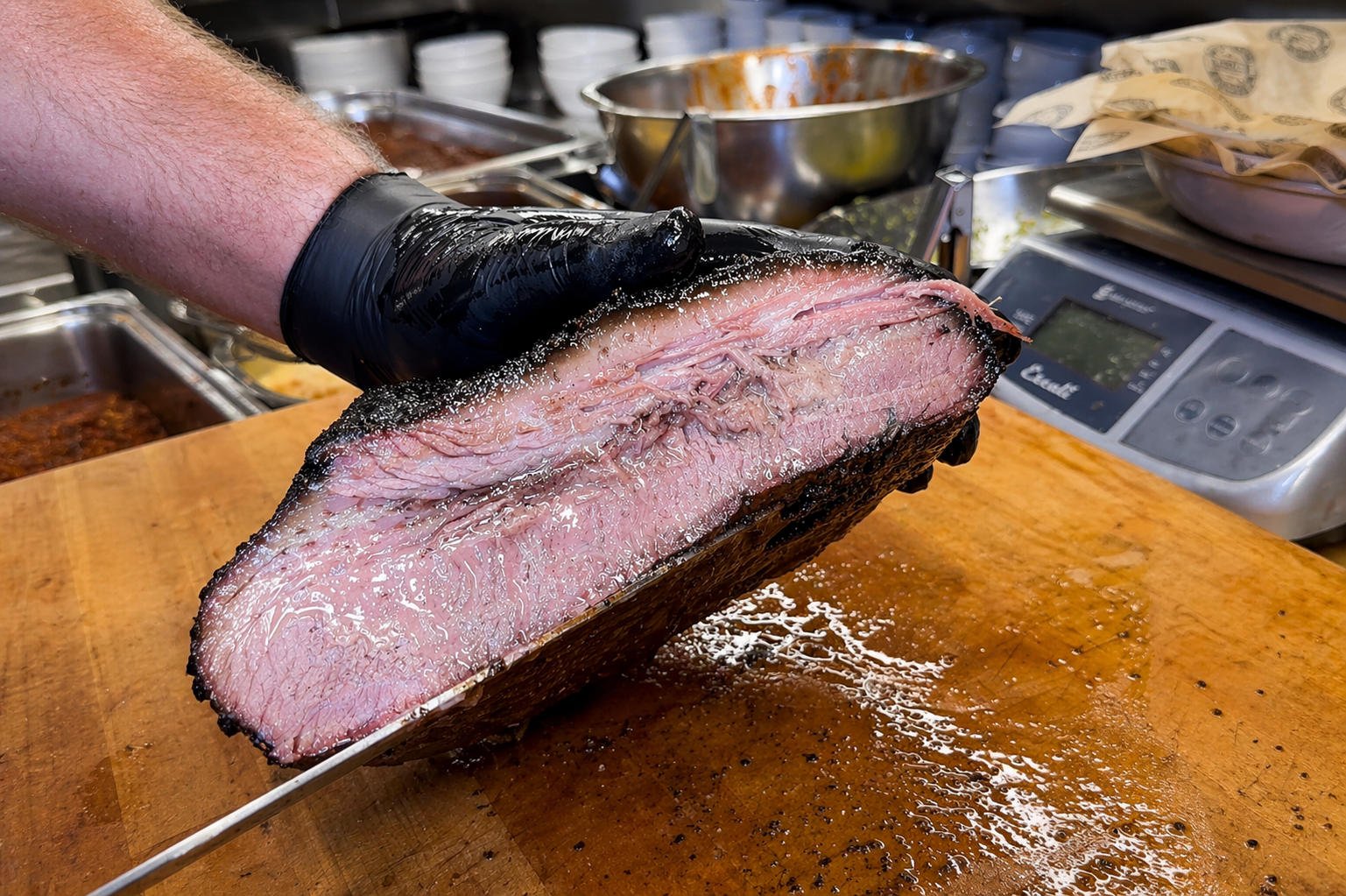
Understanding Brisket Cuts (Flat vs Point)
To understand the difference between fatty and lean brisket, you need to know where they come from.
A full brisket has two main parts:
- Flat (lean cut)
- Point (fatty cut)
The flat is:
- Thinner
- More uniform
- Lower in fat
The point is:
- Thicker
- Marbled with fat
- Richer in flavor
When you order brisket, you’re usually choosing between slices from one of these sections—or a combination of both.
Fatty Brisket: Flavor Over Everything
Fatty brisket comes from the point cut, and this is where BBQ really shines.
The fat melts during the smoking process, creating:
- Juicier meat
- Softer texture
- Deeper flavor
This is the brisket that:
- Almost falls apart when you pick it up
- Feels rich and buttery
- Leaves a lasting smoky taste
For many BBQ lovers, this is the “correct” choice.
However, it’s not for everyone.
Fatty brisket can feel heavy if you eat too much of it, especially if it’s paired with rich sides. But if your goal is maximum flavor and tenderness, this is hard to beat.
Lean Brisket: Clean and Balanced
Lean brisket comes from the flat cut and offers a completely different experience.
It has:
- Less fat
- A firmer bite
- A more straightforward beef flavor
This makes it:
- Easier to eat in larger portions
- Less greasy
- More balanced for some diners
Lean brisket is often preferred by:
- First-time BBQ eaters who want something lighter
- People who don’t enjoy fatty textures
- Those pairing brisket with heavier sides
That said, lean brisket can dry out if not cooked properly. When done right, though, it still delivers solid flavor without the richness of the fatty cut.
Fatty vs Lean: Side-by-Side Comparison
| Feature | Fatty Brisket | Lean Brisket |
| Texture | Soft, juicy | Firm, structured |
| Flavor | Rich, intense | Mild, beef-forward |
| Moisture | High | Moderate |
| Best For | Flavor lovers | Lighter meals |
| Risk | Can feel heavy | Can be dry if overcooked |
Which One Should You Order?
Choosing between brisket fatty or lean depends on your situation.
Go for fatty brisket if:
- You want the full BBQ experience
- You care about flavor and tenderness
- You’re okay with a richer meal
Go for lean brisket if:
- You want something lighter
- You’re eating a larger portion
- You prefer a cleaner bite
Best move:
Order both.
Trying a mix gives you:
- Flavor from the fatty cut
- Balance from the lean cut
It’s the easiest way to understand your preference without committing to one.
How Sides and Drinks Affect Your Choice
Your choice between fatty and lean brisket shouldn’t happen in isolation.
If you’re pairing with:
- Heavy sides (mac and cheese, fries): lean brisket balances the meal
- Light sides (coleslaw, pickles): fatty brisket works better
Drinks also matter:
- Rich brisket pairs well with lighter drinks
- Lean brisket can handle heavier drink pairings
You can explore drink pairings here
And if you’re planning around deals or trying multiple combinations, you can check available options here
Common Mistakes When Choosing Brisket
1. Always choosing lean to “be healthier”
You sacrifice flavor without fully understanding the difference.
2. Avoiding fatty brisket completely
You miss out on what makes BBQ special.
3. Not considering the full meal
Sides and drinks should influence your choice.
4. Ordering only one type
You lose the chance to compare and learn your preference.
Pro Tip: Order Based on Experience, Not Assumptions
Many people assume:
- Fatty = too greasy
- Lean = better option
That’s not always true.
Well-prepared fatty brisket isn’t greasy—it’s balanced. And poorly cooked lean brisket can be dry and disappointing.
The quality of preparation matters just as much as the cut.
Key Takeaways
- The debate between brisket fatty or lean comes down to flavor vs balance
- Fatty brisket is richer, juicier, and more flavorful
- Lean brisket is lighter, firmer, and easier to eat in larger portions
- The best approach is to try both and compare
- Pairing with sides and drinks should influence your choice
- Properly cooked brisket—fatty or lean—makes all the difference
FAQs
1. Is fatty brisket better than lean brisket?
Fatty brisket is generally more flavorful and juicy. Lean brisket is lighter and easier to eat in larger portions. The better choice depends on your preference.
2. Does fatty brisket taste greasy?
Not when it’s cooked properly. The fat melts into the meat, creating a rich but balanced flavor. It should feel juicy, not oily.
3. Why is lean brisket sometimes dry?
Lean brisket has less fat, so it can lose moisture more easily during cooking. If overcooked, it becomes dry and tough. Proper preparation is key.
4. Should beginners choose fatty or lean brisket?
Beginners should try both if possible. Fatty brisket shows what BBQ can really offer, while lean brisket provides balance. Comparing both helps you decide your preference.
5. Can I mix fatty and lean brisket in one order?
Yes, and it’s actually recommended. Mixing both gives you the best of both worlds. It also creates a more complete BBQ experience.